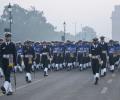
The Indian Navy's Republic Day tableau will showcase indigenous platforms like INS Vikrant and a stitched ship from the 5th century CE, highlighting the theme of a 'Strong Navy for a Strong Nation'.

The Swadeshi Jagran Manch (SJM) is advocating for the termination of the moratorium on customs duties for electronically transmitted digital products, arguing that it hinders self-reliance, causes revenue losses, and restricts India's ability to tax emerging technologies like AI.

President Droupadi Murmu undertook a sortie onboard the Indian Navy's INS Vaghsheer, highlighting the nation's naval capabilities and commitment to maritime security.

India and Israel have elevated their relationship to a special strategic partnership, focusing on enhanced cooperation in trade, technology, and defense, while also addressing regional peace initiatives.

ISRO has announced plans for seven launch missions by March, including the first uncrewed mission for the Gaganyaan project and demonstrations of new satellite technologies.

India is set to take its first steps towards its own human space flight when the uncrewed Gaganyaan mission soars to the skies later this year. Private players in the space sector are also gearing up for launching satellites on home-built rockets.

India on Monday asserted its "entire nuclear technology has been developed indigenously and action consistent with responsible behaviour."\n
"The world might face a food crisis if the war continued till the end of April, as it could have a dramatic impact on planting in Europe and North America," said Matt Simpson, CEO of Brazil Potash.

If approved, the fighters would help the IAF to build its reducing squadrons, especially after the MiG-21 was decommissioned last year.

In a region increasingly shaped by competition and coercion, such collaboration strengthens security without confrontation, builds capacity without dependency and promotes order without domination, points out Dr Kumar.
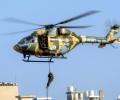
'The tools of warfare are changing. The MoD must deepen its engagement with technology thinkers that can present compelling visions of where warfare may be heading.'

Doval said India hit nine terror targets crisscrossing Pakistan with precision and missed none of them

Around 100 artistes heralded the parade, on the theme 'Vividata Mein Ekta (Unity in Diversity) that featured a grand presentation of musical instruments, demonstrating the nation's unity and rich cultural diversity.

India and Russia are expected to unveil a major nuclear energy partnership during Vladimir Putin's visit, potentially involving Russian small modular reactors and expanded cooperation as India pushes toward its 100-GW nuclear goal by 2047.

These upcoming launches carry added significance in light of setbacks suffered in recent years.

Sustaining 8 per cent-plus growth rates is necessary if we are to reach high-income status by 2047, points out Amitabh Kant.

During the financial year 2025-2026, the defence ministry has signed a total of 182,492 crore capital acquisition contracts, highlighting the government's push to modernise the armed forces and promote indigenous defence production.

India's nuclear energy share in total installed capacity remains limited, fluctuating between 1.9 per cent and 2.9 per cent from FY10 to FY24.

The Bhairav Battalion is positioned between the Para Special Forces and regular infantry units to meet modern warfare requirements, especially in view of drone-intensive warfare.
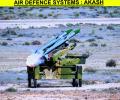
It marked a "milestone" in India's journey towards technological self-reliance in military operations, the ministry said on Operation Sindoor.
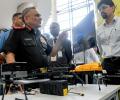
Chief of Defence Staff General Anil Chauhan emphasizes the importance of self-reliance in Unmanned Aerial Vehicles (UAVs) and Counter-Unmanned Aerial Systems (C-UAS) for India, citing recent global conflicts and Operation Sindoor as examples of their strategic importance.

'The heat shield technology for re-entry vehicles was first mastered in DRDO for the Agni missile.' 'This is why the Americans were so opposed to Agni in the 1980s, unlike other missiles -- it was a re-entry vehicle.'
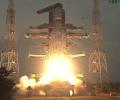
The heaviest communication satellite to be launched from the Indian soil onboard a new generation, homegrown 'Bahubali' rocket was successfully placed into the intended orbit on Sunday, the Indian Space Research Organisation said.

'This policy is a vision to position Karnataka as the epicentre of India's space ambitions'

Avatar: Fire And Ash is visually stunning and emotionally engaging, offering strong performances and thrilling action, notes Syed Firdaus Ashraf.

After Operation Sindoor, the Army and Navy now view the IAF as not a supporting arm, but the spearhead of India's warfighting capability, capable of decisive outcomes across domains, explains Air Commodore Nitin Sathe (retd).
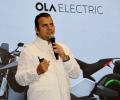
Ola Electric has denied media reports suggesting its involvement in a leak of proprietary pouch cell technology (tech) from South Korea's LG Energy Solution, calling the allegations "baseless". The company said it has no commercial or research interest in the older pouch cell format cited in the reports, emphasising that its new 4680 Bharat Cell - based on advanced dry-electrode cylindrical tech - is already in commercial production.
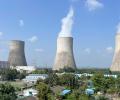
The Bill is likely to pave the way for amending two existing legislations -- the Atomic Energy Act 1962, and the Civil Liability for Nuclear Damage Act 2010.

Defence Minister Rajnath Singh lauded the armed forces' performance during Operation Sindoor, emphasizing the importance of technology and adaptability in modern warfare. He urged air force commanders to learn from the operation and stay prepared for future challenges.

The threat of wars hovers over the negotiations in Oman, but the good part is that Trump called the talks to be 'very good' and Iran's President Masoud Pezeshkian responded that they 'constitute a step forward', points out Ambassador M K Bhadrakumar.

In a country where wearing lipstick could still invite disapproval, Simone Tata understood that Lakmé's future depended on shifting attitudes.
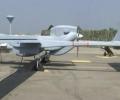
The sources declined to specify the number of drones the Navy plans to acquire but said the focus is now on manufacturing the MK-II in India through partnerships with Hindustan Aeronautics Limited (HAL) and Elcom.

The Lokapriya Gopinath Bardoloi International Airport in Guwahati has inaugurated a new nature-themed terminal building, designed to handle 13.1 million passengers per year and serve as a key aviation hub for the northeast and a gateway to Southeast Asia.

The deal is expected to help HAL to get its complete requirement of 212 GE-404 engines in continuity, avoiding any types of delays in engine supplies.

'Some success has been achieved in raising the costs of terrorism for Pakistan.'

President Droupadi Murmu addressed the nation on the eve of Republic Day, emphasising India's role in promoting peace, the empowerment of women, and the country's economic growth.

Fuel loading at India's first prototype fast-breeder reactor in Kalpakkam is expected to start next week, marking a significant step in the country's nuclear program.

Ola Electric on Thursday said it has forayed into the country's Rs 1 lakh crore battery energy storage systems market, which is projected to grow to over Rs 3 lakh crore by 2030.

Announcing the launch of "Mission Sudarshan Chakra", Modi said it will be aimed at neutralising enemy threat and enhancing India's offensive capabilities.

Prime Minister Narendra Modi kept up his tradition of celebrating Diwali with the Indian armed forces.
